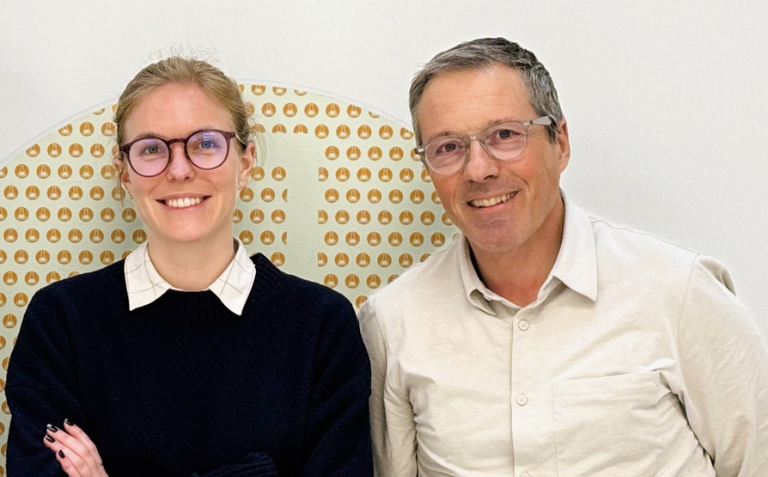
Millicent Dockerill Wins L’Oréal-UNESCO Award

Share this article
Dr Millicent Dockerill, researcher at the University of Geneva’s Department of Organic Chemistry and founder of the UNIGE spin-off Reverso Therapeutics, is one of the four laureates of the 2026 Swiss L’Oréal–UNESCO For Women in Science Awards. The prize, worth CHF 25,000, will be presented on 21 October 2026 in Zurich. The awards are given by L’Oréal Switzerland with the Swiss Commission for UNESCO and the Swiss Academy of Engineering Sciences (SATW).
An anticoagulant with an “off switch”
Anticoagulants save lives, but they also carry a risk of serious bleeding. Millicent Dockerill is developing next-generation reversible anticoagulant therapies. Her platform pairs the drug with a fast-acting antidote that works like a “chemical zipper”, allowing clinicians to stop the drug’s effect instantly in an emergency. The approach could make treatment safer for vulnerable patients, including pregnant women.
A remarkable run of recognition
The L’Oréal–UNESCO award adds to a strong series of successes for this research:
- Bioinnovation Day (BIND): Reverso Therapeutics won the Best Academic Project Award.
- Innosuisse grant: in December 2025, Reverso secured a CHF 710,000 Innosuisse grant to fund synthetic feasibility work and in vivo efficacy and benchmarking studies, moving its lead compound closer to preclinical development.
- Peer-reviewed validation: preclinical results for the reversible anticoagulant, developed with Prof. Nicolas Winssinger’s team at UNIGE, were published in Nature Biotechnology.
A fine example of how academic research in the Swiss Health Valley can turn into a therapy with real potential for patients.
The other 2026 laureates
- Dr Ing. Jana Musilová (ETH Zurich, D-BSSE) is building open-source models of a personalised “digital twin” of the menstrual cycle to improve the diagnosis and treatment of endometriosis and PCOS.
- Dr Vera Vollenweider (University of Zurich) is studying whether depriving multidrug-resistant bacteria of iron can make them lose the genetic elements that carry resistance and virulence genes.
- Dr Oana Pelea (University of Zurich) is developing next-generation bridge recombinase systems for precise, large-scale genome rearrangements in human cells, with potential for treating genetic diseases.
Congratulations to all four laureates!
➡️ Sources: L’Oréal–UNESCO laureates announcement (PDF) · Reverso Therapeutics secures CHF 710,000 Innosuisse grant | 📸 Millicent Dockerill, founder of Reverso Therapeutics, and Prof. Dr. Nicolas Wissinger